Graduation Cap Applique: A Designer’s Practical Review
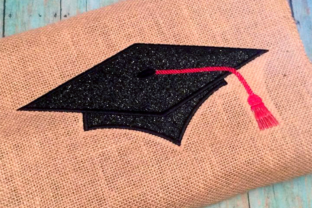
As an embroidery designer who has stitched out countless seasonal motifs for client projects and shop inventory, I approach every new machine embroidery design with a critical eye. When evaluating the Graduation Cap Applique, my first impression is one of clean geometry and celebratory utility. This isn't just a decorative graphic; it is a functional design asset intended to anchor a product. The shape of a graduation cap is inherently structural, featuring strong horizontal lines and a distinct mortarboard silhouette that translates beautifully into fabric. For those of us running a craft business or managing an Etsy shop, this design offers immediate recognition. It communicates "achievement" instantly without needing additional text, making it a versatile foundation for custom orders during the busy spring and early summer rush.
Real-World Application: Stitching the Senior Sweatshirt
To truly understand the value of this applique design, I mentally placed it in a real production scenario: creating a custom crewneck sweatshirt for a high school senior. In this context, the design needs to perform on fleece, which can be tricky due to its pile and stretch. The beauty of an applique style here is coverage. Instead of relying solely on dense fill stitches that might cause puckering or create a stiff, bulletproof patch on a soft garment, the applique allows the base fabric to do the heavy lifting. The design uses the sweatshirt material itself as part of the aesthetic, bordered by precise satin or running stitches.
When stitching this for a client, the visual hierarchy matters. The Graduation Cap Applique serves as the primary focal point, likely centered on the chest or positioned over the heart. Because the steps are separated by color changes, I can easily customize the thread colors to match specific school branding without digitizing from scratch. This flexibility is gold for personalized gift creators. However, because fleece has texture, I would ensure the tack-down stitches are secure enough to prevent the applique fabric from fraying against the nap of the sweatshirt. The result is a professional, boutique-quality finish that feels handmade yet polished, exactly what customers expect when paying a premium for custom apparel.
Navigating Fabric Choices and Hoop Limitations
While this design is versatile, practical experience dictates where caution is necessary. The product includes four hoop sizes, which is excellent for scaling, but designers must respect the physics of the stitch. If you are working with the smallest hoop size for items like baby onesies or pocket accents, verify that the internal details remain legible. Reducing an applique too much can cause the satin borders to overlap, creating a dense lump that distorts the fabric. For baby embroidery or lightweight knits, always test the scaled-down version first. The stitch density must be balanced; too heavy, and you risk tearing delicate fabric; too light, and the applique edges may curl after washing.
Textured fabrics like terry cloth towels or waffle-weave blankets present another challenge. The smooth surface required for a crisp applique edge can get lost in high-pile textures. In these cases, using a water-soluble topping is non-negotiable to keep the stitches visible and the edges defined. Conversely, when working with dark fabrics, contrast is key. A navy cap on a black tote bag will disappear unless outlined with a metallic or bright white border. Always preview your thread colors against the actual project fabric, not just a screen simulation. For tote bag design projects involving canvas or denim, this Graduation Cap Applique is generally safe due to the fabric's stability, but ensure your stabilizer choice matches the weight of the bag to prevent hooping distortion.
Critical Technical Notes: Do Not Color Sort
The most vital technical instruction for this specific embroidery file is explicitly stated in the product description: do not color sort. As someone who reviews digital files regularly, I cannot stress this enough. Applique designs rely on a strict sequence of operations: placement line, tack-down stitch, trim, and final border. If your machine software automatically sorts colors to reduce thread changes, it will ruin the structural integrity of the design. You might end up stitching the final satin border before the applique fabric is even tacked down, resulting in a failed project and wasted materials.
Always load the file exactly as provided. The nine included formats cover most major machine brands, but compatibility varies. Before committing to a large batch of commercial embroidery or listing a new product, run a single test stitch-out. Check the registration marks. Does the final border align perfectly with the cut edge? Is there adequate basting to hold the fabric in place? These small details determine whether a finished product looks amateur or professional. Additionally, review the licensing terms included in the zip file. Just because you bought the digital embroidery file does not automatically grant permission to sell the digitized file itself or use it for unlimited commercial reproduction. Clarifying this protects your business and respects the original digitizer.
Elevating Product Value and Customer Trust
Beyond the technical execution, the Graduation Cap Applique impacts how customers perceive your brand. In the crowded market of Etsy seller listings and craft fair booths, presentation drives sales. A well-executed applique suggests care and quality. When photographing your work for printable mockups or social media, ensure the lighting captures the texture of the stitches. Flat, shadowless photos can make embroidery look like a vector graphic; angled shots that show the sheen of the thread and the dimension of the applique build trust. Buyers want to see that the handmade product has tangible value.
This design also lends itself to bundling. Consider pairing the cap with year digits or initials to create a comprehensive graduation collection. However, maintain consistency in style. Mixing this clean applique with a hyper-realistic floral fill stitch might create visual dissonance. Stick to complementary design assets that share similar stitch types and densities. Whether you are making holiday embroidery gifts for teachers, creating merchandise for a university bookstore, or fulfilling custom orders for proud parents, the cohesion of your portfolio matters. Customers return to makers whose work feels reliable and aesthetically unified.
Final Verdict for Makers and Sellers
Ultimately, the Graduation Cap Applique is a robust tool for the serious embroiderer. Its strength lies in its adaptability across different substrates, from sturdy canvas totes to softer apparel, provided the user respects the technical constraints of scaling and fabric preparation. The separation of steps by color change facilitates easy customization, while the warning against color sorting safeguards the design's functionality. For small shop product lines, it offers a timeless motif that sells year after year without feeling dated.
My advice to fellow designers and business owners is to treat this file as a starting point, not a shortcut. Test it on scrap fabric that mimics your final project. Experiment with different applique materials—felt, cotton, vinyl, or glitter—to see how they interact with the stitch pattern. Verify that your stabilizer strategy supports the design weight. By applying professional judgment and practical testing, you transform a simple zip file into a profitable, high-quality offering that celebrates milestones with craftsmanship. This level of diligence is what separates hobbyists from established professionals in the embroidery industry.